
Disposable towels have moved from travel “nice-to-have” to an everyday hygiene product used in skincare routines, gyms, salons, hospitals, baby care, and even food-service cleanup. If you’re searching “Is disposable towel safe to use?”, the honest answer is: yes—when you choose the right material, verify basic safety standards, and use them correctly. The main safety risks are usually not the concept of disposable towels itself, but poor-quality fibers, unknown additives, contamination during storage, or misuse (like reusing a single-use towel too long).
This guide breaks down safety from a professional, practical point of view, with a focus on Disposable Dry Towels made from Nonwoven Towels materials.
1) What Are Disposable Dry Towels Made Of?
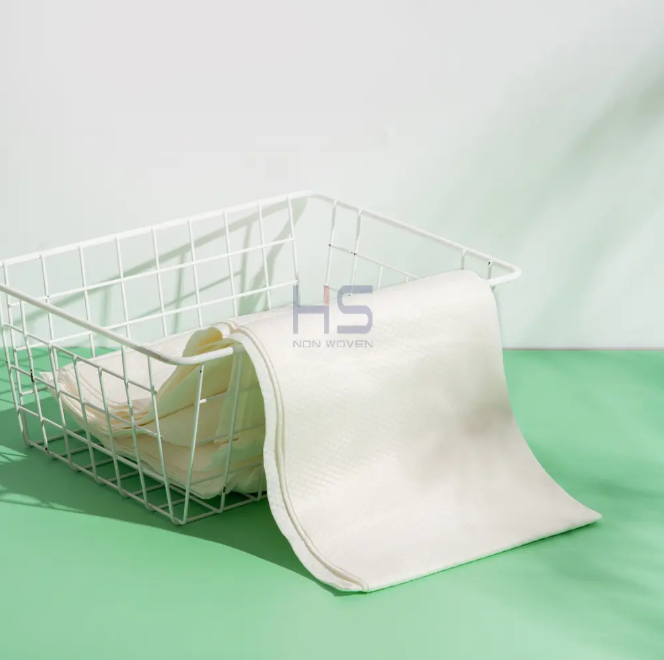
Most Disposable Dry Towels are nonwoven fabrics. “Nonwoven towels” means the fibers are bonded without traditional weaving—this can create a soft, lint-controlled sheet that absorbs well and stays stable when wet.
Common fiber types:
- Viscose/Rayon (plant-based cellulose): soft, highly absorbent, popular for facial and baby towels
- Polyester (PET): strong, durable, often blended to improve tear resistance
- Cotton blends: soft feel, typically higher cost
A high-quality nonwoven towel usually balances softness with strength. For example, many premium sheets in the market range around 50–80 gsm (grams per square meter)—often thick enough for face drying without tearing, yet still disposable and packable.
2) Safety Factor #1: Skin Contact and Irritation Risk
Disposable towels are generally safe for skin, but sensitivity varies. If you have acne, eczema, or allergies, pay attention to:
- No added fragrance: fragrance is a common irritant
- Low-lint / lint-free performance: reduces fiber residue on the face (important after skincare)
- No harsh binders: some low-grade nonwovens can feel scratchy due to bonding methods or fillers
Why disposable can be safer than cloth: traditional cloth towels can hold moisture for hours, creating an environment where microbes can grow. A disposable towel, used once and discarded, helps reduce that risk—especially in humid bathrooms.
3) Safety Factor #2: Cleanliness, Sterility, and Packaging
Not all disposable towels are sterile. Most are hygienic, not “surgical sterile.” For everyday use, hygienic manufacturing and sealed packaging are usually sufficient.
Look for:
- Individually wrapped towels for travel, salons, or clinical settings
- Resealable packs to reduce dust and bathroom humidity exposure
- Basic quality management claims such as ISO 9001 (process control) and, when relevant for medical channels, ISO 13485
If you’re using towels for post-procedure skin, wound-adjacent care, or newborns, ask suppliers whether the product is made in a controlled environment and whether they can provide test reports (microbial limits, skin irritation testing).
4) Safety Factor #3: Absorbency and Wet Strength
A towel that shreds, pills, or collapses when damp can leave residue on skin and increase friction—both are bad for sensitive faces.
Two useful performance metrics:
- Water absorption: Nonwoven viscose blends can absorb multiple times their weight in water, which means faster drying with less rubbing.
- Wet tensile strength: Good Disposable Dry Towels stay intact when wet, reducing lint and improving comfort.
Practical tip: for facial use, choose a towel that can handle a full face dry in one sheet without tearing—this usually correlates with better fiber quality and bonding.
5) Are Disposable Towels Safe for Face and Acne-Prone Skin?
Often, yes. Many dermatology-focused routines recommend avoiding shared family towels and reducing towel reuse. Disposable towels can help by:
- lowering cross-contamination risk
- minimizing bacteria transfer from damp cloth
- reducing friction if the towel is soft and absorbent
Best practice: pat dry, don’t scrub. Scrubbing increases irritation and can worsen redness.
6) Environmental and Disposal Safety
Disposable does create waste, so use them intentionally:
- Choose plant-based fibers (like viscose) when possible
- Avoid flushing: most nonwoven towels are not toilet-safe
- Dispose in trash; in food-service/clinical settings follow local waste rules
If sustainability is a priority, consider reserving disposable towels for high-hygiene needs (face care, travel, guest use) and using washable towels for low-risk tasks.
Bottom Line
Disposable towels are safe to use when you pick high-quality Nonwoven Towels with known fibers, minimal additives, low lint, and hygienic packaging. For most people, Disposable Dry Towels can actually improve hygiene versus repeatedly using a damp cloth towel—especially for facial care, gyms, salons, and travel. If you share your use case (face, baby, salon, medical, kitchen) and whether you need fragrance-free or biodegradable options, I can suggest the best material blend and gsm range to target.
Post time: Jan-19-2026